
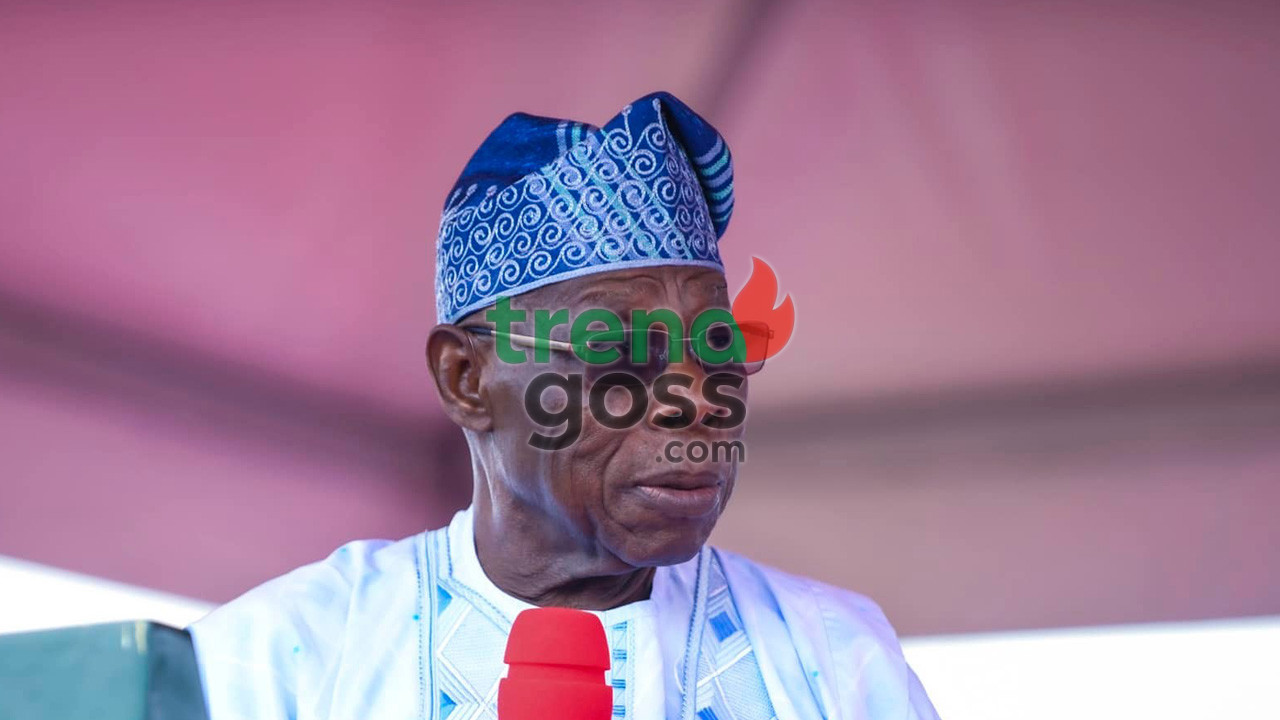
Former President Olusegun Obasanjo has issued a sobering warning that Nigeria may not survive another civil war, declaring that many of the underlying issues that led to the Nigerian Civil War remain unresolved decades after the conflict ended.
Obasanjo made the remarks on Wednesday at the Olusegun Obasanjo Presidential Library while receiving a historical publication titled Asaba Massacre from the Isama Ajie of Asaba, Chuck Nduka-Eze.
The publication documents the killing of civilians in Asaba during the Nigerian Civil War, one of the conflict’s most controversial and tragic episodes.
Obasanjo Speaks on Asaba Massacre
Reflecting on his role during the war, Obasanjo acknowledged his involvement in the conflict but said he could not provide a detailed account of the events surrounding the Asaba massacre.
According to him, military operations in that area were under the command of the late Murtala Muhammed.
“The conditions that led to the Nigerian civil war years ago still remain unresolved.
“I was involved in the civil war, but whenever people ask me about the Asaba massacre, I always tell them I cannot give details because Murtala Muhammed was responsible for operations in that area,” Obasanjo said.
Warning Against Repeating History
The former president stressed that Nigeria must confront the root causes of division that fueled the civil war rather than ignore them.
He cautioned that unresolved grievances, if left unaddressed, could threaten the country’s unity, warning that another civil conflict could have devastating consequences for the nation.
Obasanjo also disclosed that he had previously been questioned about Murtala Muhammed’s role during the war but maintained that he was not in a position to speak on operations outside his command.
Renewed Focus on Historical Reconciliation
His comments come amid renewed national conversations on justice, historical reconciliation, and the need to preserve accurate accounts of the Civil War, particularly events surrounding the Asaba massacre.
Observers believe the publication of historical records could contribute to deeper reflection on Nigeria’s past while encouraging dialogue aimed at preventing future conflicts.