
Today, February 28, 2026, a dramatic and highly consequential escalation in Middle Eastern tensions erupted into open military confrontation as Israel and the United States launched coordinated military strikes against Iran, drawing sharp reactions around the world and raising urgent questions about regional stability, diplomatic failure, and the human cost of war. This development — confirmed by multiple global outlets — is the biggest geopolitical flashpoint right now and is dominating global news feeds.
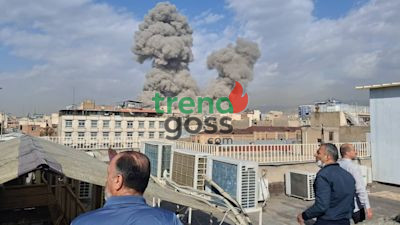
According to reports from major international news agencies, highly visible explosions were seen across Tehran, Iran’s capital, where smoke rose over multiple areas and sirens sounded across the city, signaling a dramatic and widely reported attack on Iranian military sites and regime infrastructure.
Both Iran and Israel have closed their airspace to civilian flights in response to the escalating operations, while emergency measures are in place across regions expected to face counter-attacks. Neighboring countries like Iraq and the UAE have also temporarily grounded civilian air travel amid heightened security alerts.
Israeli officials described the offensive as a “pre-emptive strike” intended to eliminate perceived imminent threats, particularly related to Iran’s missile capabilities and contentious nuclear ambitions. Israeli Defence Minister Israel Katz declared a state of emergency across Israel, underscoring the severity of the moment.
U.S. leadership — including President Donald Trump — has publicly aligned with the operation, framing the strikes as part of a broader military effort to neutralize what they call long-standing dangers posed by Tehran. Trump also called on Iranian citizens to rise up against their government, effectively urging internal pressure for regime change.
In retaliation, Iranian forces fired missiles and drones toward Israeli territory, activating air defence systems and prompting civilians in parts of northern Israel to hear explosions as authorities worked to intercept incoming weapons.
This latest confrontation is extraordinary not just for its military scale but for its global implications. Analyses suggest that this is not a short flare-up, but rather a significant escalation that could reshape geopolitical alliances, disrupt global markets, and impact everyday lives far beyond the Middle East.
Public Reaction: Hope for Peace vs. Fear of War
Across social media, public sentiment is intensely divided. Some voices — particularly in Western countries — support what they see as a necessary strike to prevent Iran from developing advanced missile or nuclear capabilities. They argue that decades of diplomacy and sanctions have failed and that decisive action may force change.
But other voices — especially among people across Africa, Asia, and Europe — express deep alarm. Many fear this could spiral into a larger regional war, drawing in proxy groups, neighboring states, and global powers, potentially igniting conflicts in Syria, Lebanon, Iraq, or beyond. Critics also decry the humanitarian consequences of bombing cities — particularly for civilians who may be caught in the crossfire.
In Iran, state media has denounced the attack as aggressive and unjustified, while government officials have vowed retaliation, heightening concerns of a sustained cycle of strikes and counter-strikes that could destabilize the entire Middle East. []
What This Means for Nigeria and the World
For Nigerians and global citizens alike, the ramifications extend beyond news headlines. A prolonged conflict in the Middle East could affect global oil prices, economic stability, the security of international trade routes, and the wellbeing of diaspora communities. It could also influence how emerging powers navigate diplomatic ties, peace negotiations, and moral leadership on the world stage.
At its core, this conflict underscores the fragility of global peace when diplomacy fails and military force becomes the default response. Many analysts note that the window for negotiated solutions has long narrowed — and the world is now watching to see how far the escalation will go, and whether it can be contained before it grows even larger.
Regardless of political alignment, most global voices agree on one thing: every human toll of war — on soldiers, families, and civilians — is too high a cost for unresolved disputes.
#IsraelIranConflict #MiddleEastWar #BreakingNews #GlobalSecurity #Trendgoss #InternationalRelations #PeaceVsWar #WorldNews #NigeriaReact