

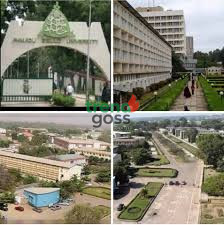
Across Nigeria, private universities are expanding rapidly. New campuses. Modern hostels. Aggressive marketing. International partnerships.
At first glance, it looks like progress. More institutions. More admission spaces. Less strike disruption.
But beneath the expansion lies a growing question: is higher education becoming a premium product?
Tuition in many private universities now rivals international fees. Payment plans exist, but affordability remains limited to upper-middle and elite families. Meanwhile, public universities struggle with funding gaps and infrastructure challenges.
So what’s happening?
Parents who can afford it are choosing stability over uncertainty. No strikes. Faster graduation timelines. Better facilities.
Students see private universities as a smoother path.
But here’s the uncomfortable part: does access now depend more on financial capacity than academic merit?
Nigeria’s youth population is exploding. Demand for higher education is rising. If quality education shifts increasingly to private hands, inequality may deepen.
At the same time, private universities argue they are filling a gap government institutions cannot fully handle. They are investing in research, tech labs, and global exposure.
Both sides have valid arguments.
The real issue is balance.
Should education — a national development driver — depend heavily on private capital? Or should government reinvest aggressively in public institutions to level the field?
Nigeria may soon face a reality where your degree’s value depends on the institution’s brand strength — and that brand strength depends on tuition levels.
That’s not just an education conversation.
It’s a future-economy conversation.
#EducationNigeria #PrivateUniversity #HigherEducation #NaijaYouth #DegreeDebate #PublicPolicy #Opinion