
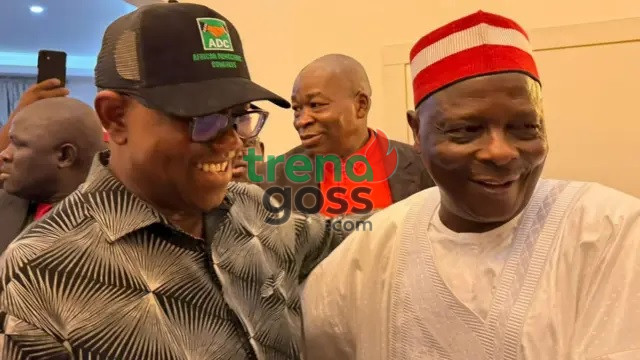
Talks of a possible political alliance between Peter Obi and Rabiu Kwankwaso are gaining fresh momentum — and Nigerians are paying close attention.
Ahead of the 2027 elections, the idea of a united opposition is once again returning to the spotlight, with many seeing it as one of the few realistic ways to mount a serious challenge to the current political order.
On paper, it makes sense.
Both leaders command strong regional loyalty, passionate grassroots supporters, and national visibility. A merger or strategic alliance could potentially consolidate votes that were previously divided — especially in a country where electoral victories are often shaped by coalition strength.
But Nigeria’s political history offers a warning.
Alliances are easy to announce — but difficult to sustain.
Because behind every coalition lies the real question:
Who leads? Who steps down? Who controls the structure?
These are the fault lines that have broken many opposition movements before they even reached the ballot.
Supporters believe an Obi–Kwankwaso alliance could represent a new political direction, one that taps into growing public frustration over economic hardship and governance concerns.
Skeptics, however, fear it could become another short-lived arrangement driven by ambition rather than ideology.
That is why this moment matters.
Because Nigerians are no longer just looking for political combinations.
They are looking for credibility, unity, and the ability to stay together under pressure.
If this alliance becomes real and survives internal battles, it could reshape the political map ahead of 2027.
But if it collapses like many before it, it will only reinforce a painful pattern:
In Nigerian politics, the opposition often defeats itself before the election even begins.
#PeterObi #Kwankwaso #NigeriaPolitics #2027Election #OppositionAlliance #TrendingNigeria #NaijaPolitics #Trendgoss