

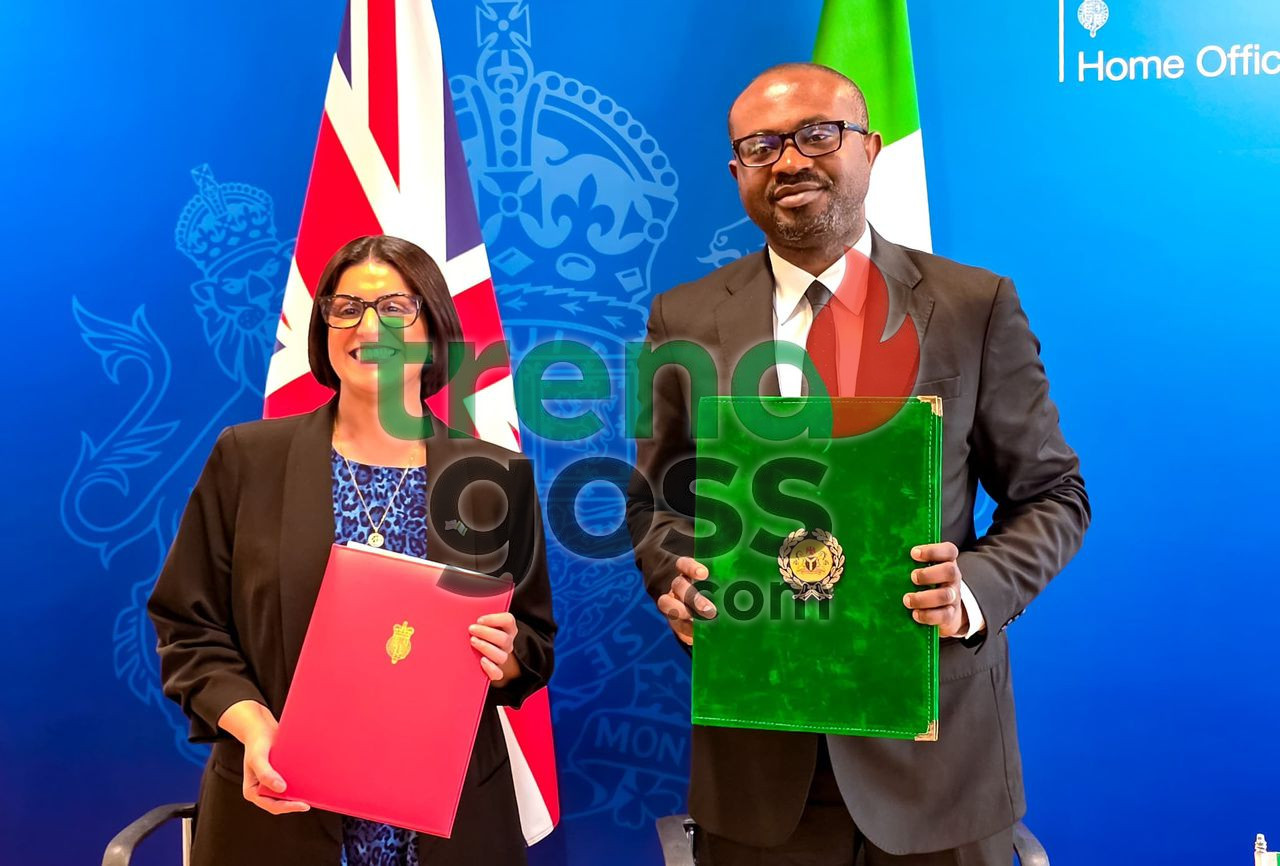
A new agreement between Nigeria and the United Kingdom is currently stirring intense debate across social media and political circles.
At the heart of the controversy is a deal that allows the UK to deport failed asylum seekers and certain categories of offenders back to Nigeria.
On the surface, it may sound like a routine diplomatic arrangement. After all, countries often agree to take back their citizens. But in today’s Nigeria — where economic hardship, unemployment, and insecurity continue to push many people to seek opportunities abroad — the timing and implications of this deal have raised serious questions.
And Nigerians are asking them loudly.
Is this agreement simply about immigration control?
Or is it a quiet acceptance of responsibility without adequate protection for citizens?
For many Nigerians living in the UK, the fear is immediate.
Failed asylum seekers are not always criminals. In many cases, they are individuals who left Nigeria due to economic hardship, insecurity, or lack of opportunity. Being deported back means returning to the very conditions they tried to escape.
That reality is what makes this deal emotionally charged.
Because behind every deportation is a story.
A person who hoped for a better life.
A family expecting financial support.
A dream that may now be cut short.
At the same time, the inclusion of individuals convicted of crimes adds another layer to the conversation. Some Nigerians argue that any citizen who commits serious offenses abroad should face the consequences, including deportation.
But even here, the debate does not end.
What happens when these individuals return?
Is Nigeria prepared to reintegrate them into society?
Or will they become part of an already struggling system?
These are not abstract questions. They are practical concerns that touch on security, employment, and social stability.
Critics of the deal argue that the Nigerian government may be prioritizing diplomatic relations over the welfare of its citizens abroad. They see it as a move that could make Nigerians in the UK more vulnerable, especially in a climate where immigration policies are becoming stricter.
Supporters, however, may argue that Nigeria cannot refuse to accept its own citizens and that cooperation with the UK is necessary for international relations.
But even that perspective does not fully settle the issue.
Because this is not just about accepting citizens.
It is about how those citizens are treated before deportation, and what awaits them after they return.
For a country already battling economic pressure, rising cost of living, and limited opportunities, the return of deported individuals — especially in large numbers — could place additional strain on an already fragile system.
And this is where the deeper concern lies.
Many Nigerians feel that the government should not only agree to such deals but also negotiate stronger protections. Protections that ensure fair treatment, proper legal processes, and structured reintegration support.
Without those safeguards, the agreement risks being seen not as cooperation — but as abandonment.
This is why the conversation is growing louder.
Because at its core, this is not just about migration.
It is about responsibility.
A government’s responsibility to its citizens, both at home and abroad.
And in a time when many Nigerians are already struggling, any decision that appears to make life harder for its people will not go unquestioned.
The real issue now is not whether deportations will happen.
It is whether Nigerians will feel protected — or exposed.
#NigeriaUKDeal #DeportationPolicy #TrendingNigeria #NaijaPolitics #ImmigrationDebate #NigeriansAbroad #SocialJustice #EconomicReality #NaijaNews #Trendgoss