

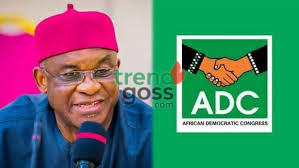
This is the question now hanging over Nigeria’s political space like a dark cloud.
And whether people want to admit it or not, it is a dangerous question.
Not because it has already been fully proven.
But because once citizens begin to ask it seriously, democracy itself has already entered risky territory.
That is why the current uproar between the African Democratic Congress (ADC) and INEC is bigger than a party quarrel.
Much bigger.
Because what Nigerians are watching is not just an internal leadership crisis.
They are watching what happens when a political platform that is beginning to gather visible opposition energy suddenly gets frozen, boxed in, and institutionally slowed down.
INEC has now formally said it will stop recognising both rival ADC factions, cease accepting official correspondence from them, and refrain from monitoring their congresses or conventions until the court matter is resolved. The commission says this is based on its reading of the Court of Appeal ruling and the need to maintain status quo pending the substantive case.
On paper, that may sound procedural.
But politics is not lived only on paper.
It is lived in public trust.
And that is exactly where the real damage is happening.
Because ADC leaders, including the David Mark-led bloc, are not treating this as neutral procedure at all. They have openly demanded the resignation or sack of the INEC chairman and national commissioners, accusing the commission of bias and democratic sabotage.
Now, let’s be honest.
The average frustrated Nigerian is not reading this like a lawyer.
They are reading it emotionally.
And emotionally, the fear is simple:
If a party can be institutionally frozen before the campaign season fully opens, what stops bigger manipulations later?
That is the real political bomb inside this issue.
Because elections are not only rigged by ballot boxes.
They can also be weakened by process, timing, access, recognition, legitimacy battles, court paralysis, and institutional pressure.
That is the truth many Nigerians now understand.
And once people begin to feel that those tools are already in motion, then trust in the coming election starts dropping long before election day.
That is what makes this ADC situation so dangerous.
Even if INEC believes it is following legal procedure, the optics are terrible.
And in a country where people are already angry over hardship, insecurity, taxes, borrowing, and elite political games, bad optics can quickly become national suspicion.
That suspicion is what should worry everyone.
Because once enough citizens begin to believe that serious opposition can be slowed down before it becomes fully competitive, then the election no longer feels like an open contest.
It starts feeling like a managed outcome waiting for formal announcement.
And that is how democracies become unstable without anybody firing a shot.
This is why the ADC matter should concern even people who do not support ADC.
Because this is no longer just about David Mark, Aregbesola, or party factions.
It is about whether Nigerians can still trust that the political field is genuinely open.
And if that trust dies, the consequences will not stay inside one party.
It will poison the entire 2027 atmosphere.
That is the real danger.
Because if INEC can freeze ADC today — fairly or unfairly, legally or controversially — then millions of Nigerians will keep asking the same frightening question tomorrow:
What stops the system from manipulating the election itself when the stakes become even higher?
And once that question starts sounding believable to the public, democracy has already been wounded.
#ADC #INEC #DavidMark #NigeriaPolitics #2027Elections #TrendingNigeria #OppositionPolitics #Tinubu #PublicOpinion #Trendgoss