
Iran–US Strait of Hormuz Deal: Who Really Controls the World’s Most Strategic Waterway?
Global attention has shifted to the volatile standoff between Iran and the United States over the Strait of Hormuz—a narrow passage that carries nearly a fifth of the world’s oil supply. With talks, threats, and partial closures dominating headlines, one key question stands out: who truly controls this critical chokepoint?
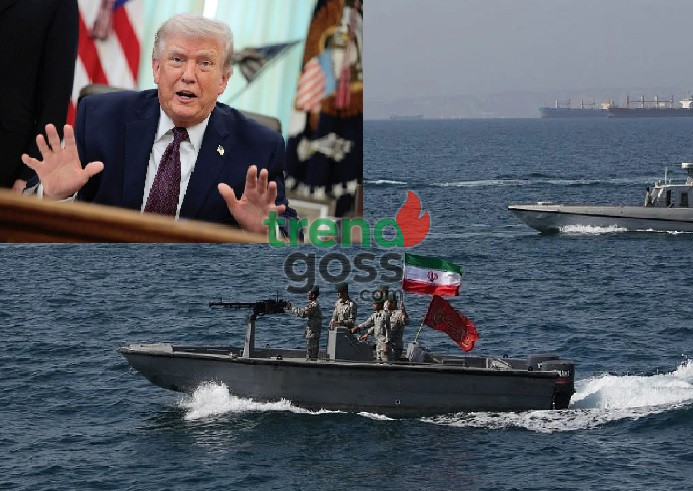
Recent developments suggest a tense and fragile arrangement rather than a clear-cut agreement. Iran has repeatedly claimed it has “full control” over traffic in the strait and has even restricted or turned back vessels amid the standoff. At the same time, the U.S. has enforced naval blockades and patrols, showing that control is not absolute on either side.
But beyond the political noise lies a more complex reality.
Legally, no single country owns the Strait of Hormuz. It lies between Iran and Oman, and while both countries control their territorial waters, the strait itself is considered an international passage that must remain open for global navigation. This means, on paper, neither Iran nor the U.S. has exclusive authority.
So why does it feel like a power struggle?
Because control here is less about law—and more about capability.
Iran’s geographic position gives it a major advantage. Sitting along the northern edge, its military can influence or disrupt shipping routes quickly, especially during conflict. In fact, Tehran has openly stated that in wartime, it can dictate access to the strait. Meanwhile, the United States leverages its global naval strength to counterbalance Iran’s influence, ensuring that the waterway doesn’t become a one-sided chokehold.
What we’re witnessing is not ownership—but a tug-of-war.
The so-called “agreement” or negotiations are therefore less about handing over control and more about managing tension, preventing total shutdown, and keeping global oil flowing. Every closure threat, every reopening announcement, reflects a delicate balance between pressure and restraint.
For the rest of the world, the stakes are enormous. Any prolonged disruption could spike fuel prices, destabilize economies, and trigger wider geopolitical conflict.
In the end, the Strait of Hormuz isn’t controlled by one nation—it is controlled by power, proximity, and politics. And right now, all three are in play.
#StraitOfHormuz #IranUS #GlobalOil #MiddleEastCrisis #WorldPolitics #OilSupply #Geopolitics #BreakingNews #EnergyCrisis #InternationalWaters #GlobalTension #NewsAnalysis