

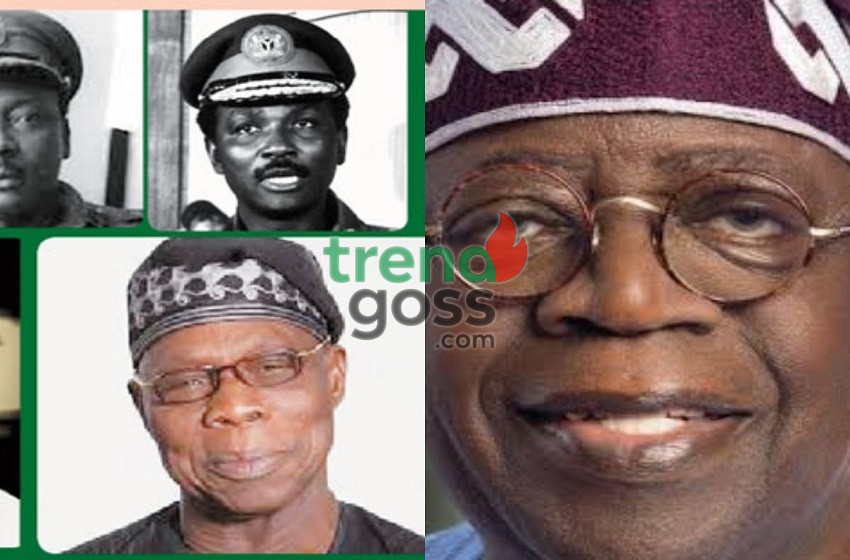
Nigeria has had a complex leadership history since independence, alternating between military and civilian presidents. Each leader contributed to shaping the nation politically, economically, and socially.
Here’s a complete list of Nigerian presidents, their geopolitical zones, and key achievements:
| # | Name | Term | Type | Zone | Key Achievements |
|---|---|---|---|---|---|
| 1 | Nnamdi Azikiwe | 1963–1966 | Civilian | Southeast | First ceremonial President of Nigeria, promoted national unity, supported education development |
| 2 | Major General Johnson Aguiyi-Ironsi | Jan–Jul 1966 | Military | Southeast | Attempted national integration post-coup; abolished regionalism in administration |
| 3 | General Yakubu Gowon | 1966–1975 | Military | North | Led Nigeria through Civil War (1967–1970), started the National Youth Service Corps (NYSC) |
| 4 | General Murtala Mohammed | 1975–1976 | Military | North | Introduced public service reforms, initiated administrative decentralization |
| 5 | General Olusegun Obasanjo | 1976–1979 | Military | Southwest | Transitioned Nigeria back to civilian rule, returned power to an elected government |
| 6 | Shehu Shagari | 1979–1983 | Civilian | North | Introduced national development plans, promoted rural electrification and agriculture |
| 7 | Major General Muhammadu Buhari | 1983–1985 | Military | North | Launched war against indiscipline (WAI), promoted anti-corruption campaigns |
| 8 | General Ibrahim Babangida | 1985–1993 | Military | North | Implemented structural adjustment program, economic reforms, planned transition to civilian rule |
| 9 | Chief Ernest Shonekan | Aug 1993 | Interim | Southwest | Short-lived interim government, maintained continuity post-Babangida |
| 10 | General Sani Abacha | 1993–1998 | Military | North | Infrastructure development, stabilized economy (though widely criticized for human rights abuses) |
| 11 | General Abdulsalami Abubakar | 1998–1999 | Military | North | Oversaw transition to democratic governance, returned Nigeria to civilian rule |
| 12 | Olusegun Obasanjo | 1999–2007 | Civilian | Southwest | Debt relief from Paris Club, economic stabilization, anti-corruption measures, privatization of key sectors |
| 13 | Umaru Musa Yar’Adua | 2007–2010 | Civilian | North | Introduced the 7-Point Agenda for national development, promoted rule of law |
| 14 | Goodluck Jonathan | 2010–2015 | Civilian | South-South | Peaceful transfer of power, Niger Delta amnesty program, economic growth initiatives |
| 15 | Muhammadu Buhari | 2015–2023 | Civilian | North | Anti-corruption campaigns, security operations against Boko Haram, economic reforms |
| 16 | Bola Ahmed Tinubu | 2023–2026 | Civilian | Southwest | Focus on economic diversification, infrastructure projects, and political reforms (ongoing) |
Quick Facts About Nigerian Presidents
- Nigeria has alternated between military and civilian rule multiple times since independence.
- Olusegun Obasanjo is unique as both a military and elected president.
- Muhammadu Buhari also served as a military head of state before being elected.
- Regional representation matters: Leadership alternates between North, Southwest, Southeast, and South-South for political balance.
Frequently Asked Questions (FAQ)
Q1: Who was Nigeria’s first president?
A: Nnamdi Azikiwe (Southeast, civilian, 1963–1966).
Q2: Who served the longest?
A: General Yakubu Gowon (North, military, 1966–1975).
Q3: How many presidents were democratically elected?
A: Five elected presidents since 1999: Obasanjo, Yar’Adua, Jonathan, Buhari, Tinubu.
Q4: Any female presidents in Nigeria?
A: No, Nigeria has not yet had a female president.
Why This Matters
- Understanding Nigeria’s presidential history helps citizens:
- Track political and regional balance
- Recognize key developments under each leader
- Compare military vs civilian administration outcomes
#NigeriaElections #PresidentsElection #TrendingNews #NigeriaPolitics


[…] READ: Complete List of Nigerian Presidents with Zones & Achievements (1960–2026) […]
[…] ALSO READ: Complete List of Nigerian Presidents with Zones & Achievements (1960–2026) […]